10 Best Things to Do in Zermatt - Your local guide to Switzerland’s Matterhorn Village
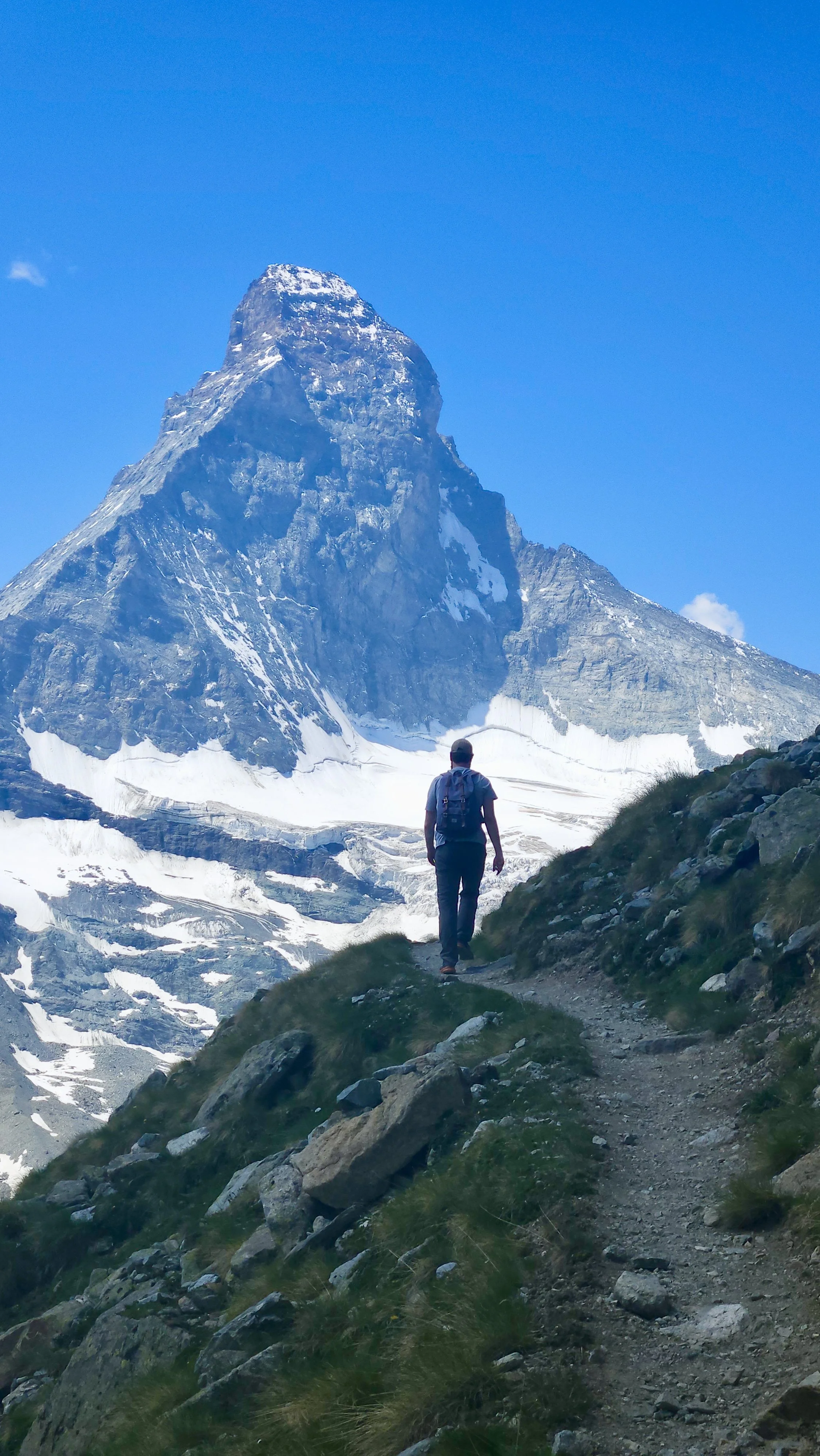
1. Stand Face to Face with the Matterhorn
No visit to Zermatt is complete without seeing the Matterhorn. Whether you’ve admired it in photographs for years or are discovering it for the very first time, nothing compares to the moment its unmistakable pyramid rises above the valley. It’s one of those rare travel experiences you’ll remember for the rest of your life.
If possible, spend at least two days in Zermatt. The Matterhorn is famous for playing hide-and-seek behind the clouds, and there’s nothing more disappointing than watching visitors leave after a one-day trip without ever seeing Switzerland’s most iconic mountain.
The easiest place to admire the Matterhorn is from Kirchbrücke (Church Bridge) in the centre of Zermatt. This famous viewpoint offers an uninterrupted view of the mountain and is one of the best places to watch the first rays of sunrise illuminate the summit or to enjoy the evening light as the sun sets behind it.
For a quieter experience, take a short walk above the village to one of our favourite local viewpoints, where the Matterhorn towers over the rooftops of Zermatt. It’s a peaceful spot that many visitors never discover.
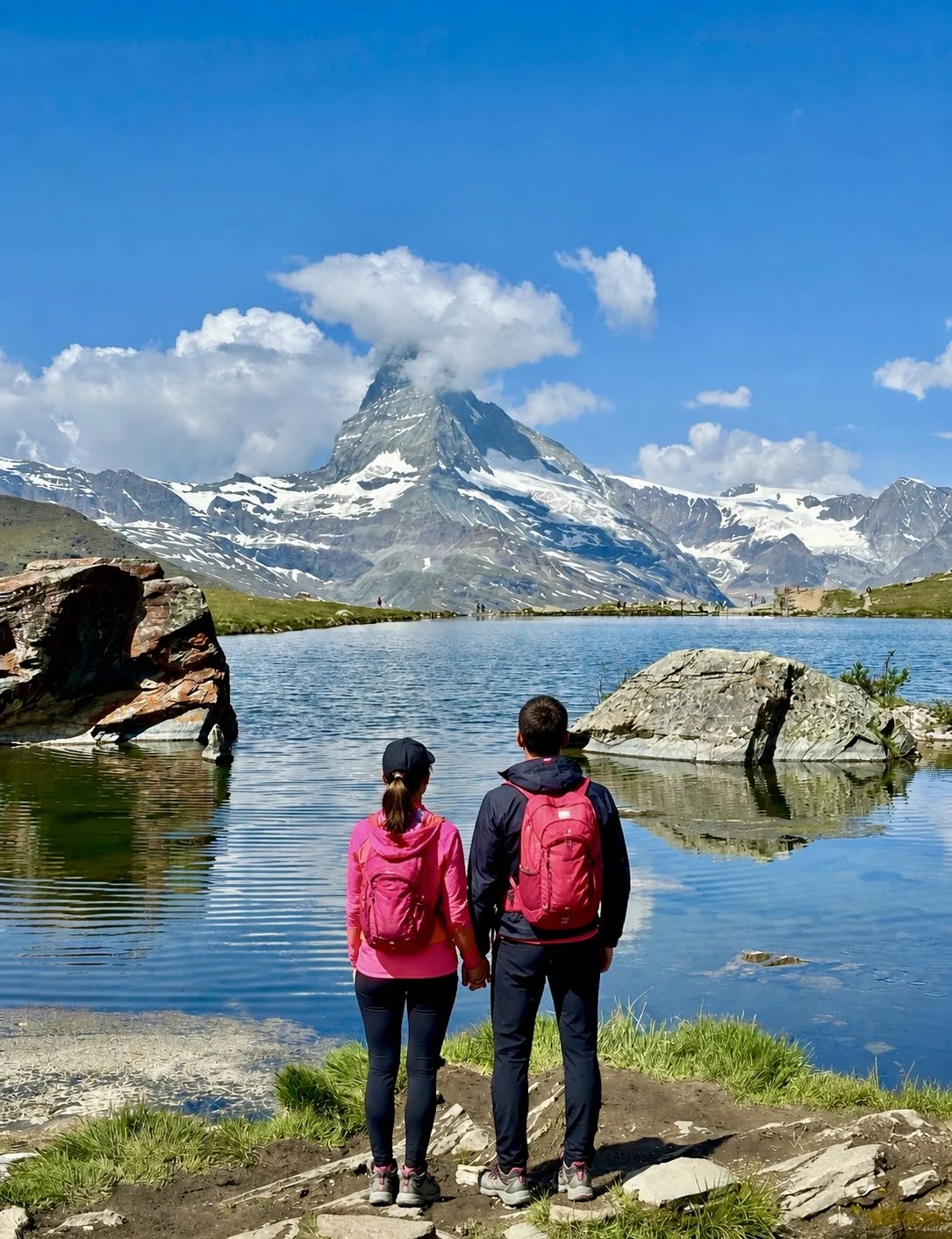
Beyond the village, the Matterhorn reveals a different character from every corner of the valley. Ride the Gornergrat Railway to Rotenboden and walk a few minutes to Riffelsee, where the mountain is beautifully reflected in the lake on calm mornings. The Sunnegga–Blauherd area offers spectacular panoramas, including the famous Stellisee and the wooden heart viewpoint overlooking the mountain. From Matterhorn Glacier Paradise, you’ll see the Matterhorn from its eastern side while enjoying a 360° panorama across 38 Alpine peaks over 4,000 metres, including Mont Blanc on clear days.
And then there are the places we won’t reveal here—quiet viewpoints where you can have the Matterhorn almost entirely to yourself. Those are some of our favourite secrets, and we’d love to share them with our guests.
2. Ride the Historic Gornergrat Railway
The Gornergrat Railway is much more than a train ride – it’s one of the highlights of any visit to Zermatt. Opened in 1898, it was the first fully electrified cogwheel railway in Switzerland and has been carrying visitors high into the mountains for well over a century.
The journey takes you to the Gornergrat (3,089 m), where one of the most spectacular panoramas in the Alps unfolds before your eyes. Standing on the viewing platform, you’ll find yourself surrounded by some of Switzerland’s highest peaks, including Monte Rosa, Liskamm, Castor, Pollux, and Breithorn, while the vast Gorner Glacier flows beneath them. On a quiet day, you can even hear the glacier creaking and shifting – a reminder that this frozen river is constantly moving.
Take a few minutes to walk above the station to the summit viewpoint, where you’ll enjoy one of the finest panoramic views in Zermatt. It’s also a wonderful place to enjoy lunch or even spend the night at the 3100 Kulmhotel Gornergrat, Europe’s highest hotel in such an extraordinary alpine setting.
One of the greatest advantages of the railway is that you can hop on and off throughout the day, exploring different landscapes at each stop. We highly recommend getting off at Rotenboden, just one stop below the summit, and taking the short walk to Riffelsee. On calm mornings, the lake becomes one of the world’s most famous photography spots, perfectly reflecting the Matterhorn in its crystal-clear waters.
Another beautiful stop is Riffelberg, where gentle alpine meadows, mountain flowers and ever-changing views of the Matterhorn invite you to slow down and enjoy the landscape. Numerous well-marked hiking trails connect the railway stations, allowing you to combine the train journey with walks of almost any length. It’s an excellent way to experience the mountains at your own pace.
If you’re visiting in winter and don’t ski, the Gornergrat still has something special to offer. The Rotenboden–Riffelberg sledging run is the highest sledging route in the Alps. Rent a sledge at Riffelberg, take the train to Rotenboden, then enjoy an unforgettable ride back down surrounded by snow-covered four-thousand-metre peaks.
Local tip: Unlike Zermatt’s cable cars, the Gornergrat Railway operates from early morning until the evening, giving you much more flexibility to enjoy the mountains at your own pace. On the journey up, choose a seat on the right-hand side for some of the best views of the Matterhorn.
3. Hike the Five Lakes Trail
If you’re looking for one hike that captures the beauty of Zermatt, this is it. The Five Lakes Trail is one of the region’s most famous walks, combining spectacular Matterhorn views with five completely different alpine lakes. The hike begins at Blauherd, reached by taking the Sunnegga funicular followed by the gondola to Blauherd, before gently descending back to Sunnegga.
The first stop is Stellisee, perhaps the most iconic lake in Zermatt. On a calm day, the Matterhorn is perfectly reflected in its crystal-clear water, creating one of the most photographed views in Switzerland. The lake has a peaceful atmosphere and is the perfect place to pause before continuing your walk.
A little further along lies Grindjisee, our favourite of the five. Surrounded by alpine meadows and rare mountain flowers, it feels far wilder than Stellisee. The water is exceptionally clear, and if you walk a little upstream above the lake, you’ll discover one of the most beautiful viewpoints of the Matterhorn reflected above the valley.
Next comes Grünsee, where the scenery changes completely. This beautiful mountain lake is one of the few where swimming is allowed, and on warm summer days its clear turquoise water is incredibly inviting. Beyond it lies Moosjisee, instantly recognisable by its striking milky turquoise colour, created by glacial meltwater. Finally, the trail reaches Leisee above Sunnegga, a favourite swimming spot for local families where generations of Zermatt children have learned to love the mountains.
Our favourite way to experience the Five Lakes Trail is to start before 6:00 a.m. If you’re comfortable hiking in the early morning, you’ll reach the lakes before the first cable cars arrive. Watching the sunrise touch the east face of the Matterhorn in complete silence is an experience very few visitors ever have.
Local tip: Before continuing, make a short detour to Fluhalp and reward yourself with what we genuinely believe is the best apple strudel in Zermatt. It’s become a tradition for us, and one we happily recommend to everyone.
4. Visit Matterhorn Glacier Paradise
No place in Zermatt takes you higher than Matterhorn Glacier Paradise. At 3,883 metres, it is Europe’s highest cable car station, offering an unforgettable high-alpine experience where snow and ice remain throughout the year. The journey itself is spectacular, carrying you from green alpine meadows into a world of glaciers, rock and permanent snow.
One of the highlights is the Glacier Palace, the highest glacier palace in the world. Hidden around 15 metres beneath the glacier, it features fascinating ice sculptures, sparkling tunnels, an ice slide and even a walk through a real glacial crevasse. It’s a magical experience for children and adults alike.
Don’t miss the viewing platform, where a breathtaking 360° panorama unfolds around you. On a clear day you can admire 38 peaks over 4,000 metres, including the Matterhorn from its eastern side, the Monte Rosa massif and, in the distance, Mont Blanc, the highest mountain in Western Europe. It’s one of those places where photographs never quite capture what it feels like to stand there.
Step outside and you’ll find yourself walking on snow even in the middle of summer. For many visitors, this is the first time they’ve ever set foot on a glacier. Children can enjoy making snowballs while skiers have access to summer skiing when conditions allow. Stay within the marked visitor areas, however—the surrounding glacier contains real crevasses and should never be entered without the proper equipment and experience.
Before heading back down, visit the mountain cinema to learn about the history of Zermatt and alpine mountaineering, then enjoy lunch with spectacular views. The restaurants serve both Swiss classics and Italian specialities, making it an ideal place to relax before continuing your adventure.
If you have time, get off one station earlier at Trockener Steg. This dramatic landscape of rock, glacier and alpine lakes offers a completely different side of the mountains. From here, experienced hikers can follow the Matterhorn Glacier Trail towards Schwarzsee, passing glacial scenery, mountain streams and stunning views beneath the north face of the Matterhorn.
From Schwarzsee, you have a choice. You can return comfortably by cable car, or continue walking all the way back to Zermatt through flower-filled alpine meadows. It’s a beautiful descent where you can stop whenever you like, sit in the grass, breathe the mountain air and watch the village slowly come closer beneath you.
Local tip: Instead of returning directly by cable car, we recommend stopping at Schwarzsee and walking back to Zermatt. You can choose the dramatic Matterhorn Glacier Trail beneath the north face or the gentler trail through alpine meadows. Either way, it’s one of the most rewarding ways to experience the mountains beyond the viewpoints.
5. Walk the Kulturweg to Zmutt – The Last Hamlet Beneath the Matterhorn
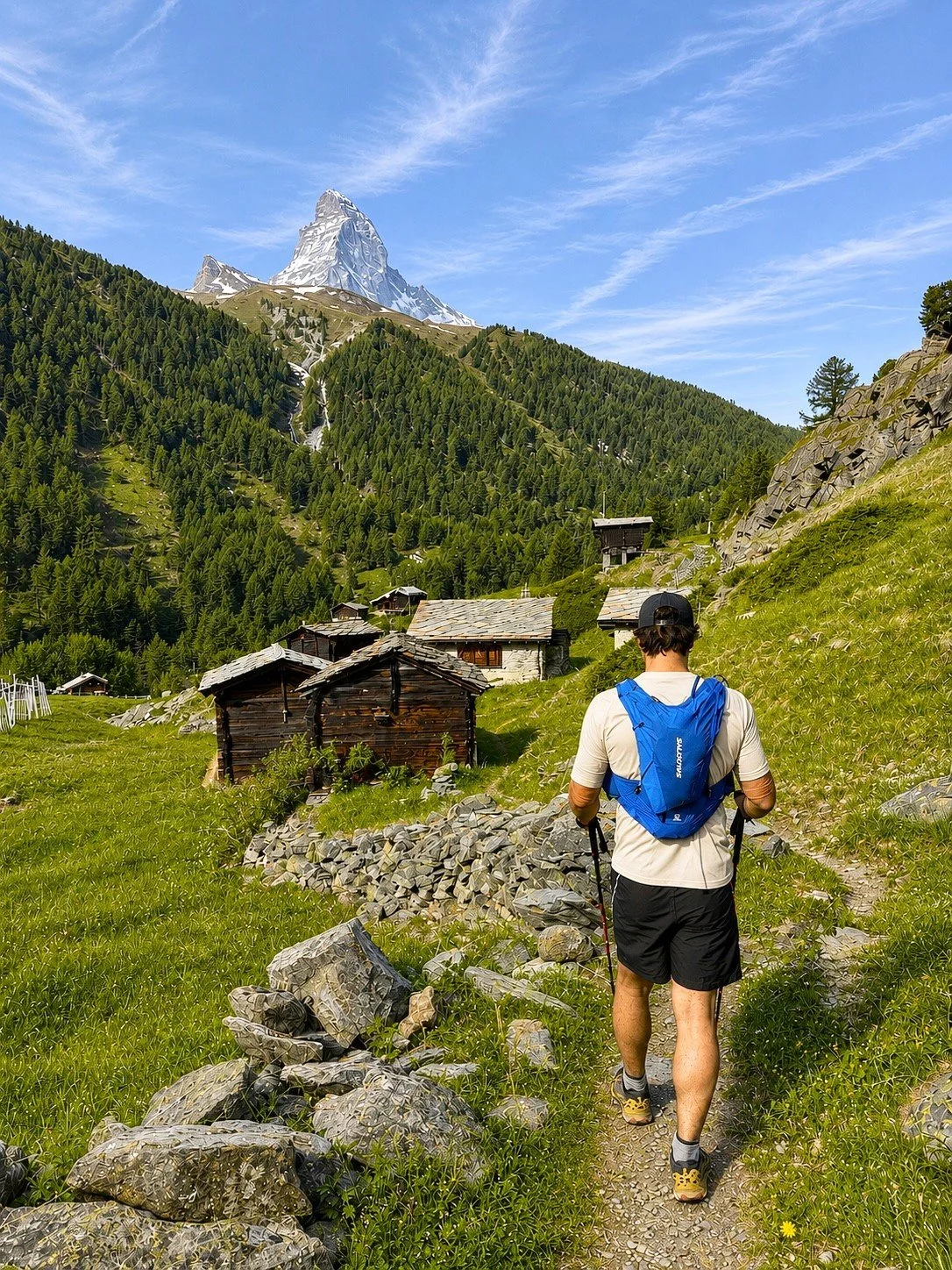
If you want to discover the quieter side of Zermatt, leave the busy streets behind and follow the Kulturweg towards Zmutt. This beautiful themed trail takes you through forests, alpine meadows and centuries of local history, all while the Matterhorn accompanies you on the horizon. Sometimes the mountain reveals itself in all its glory, sometimes only its summit appears above the trees, making every turn in the path feel different.
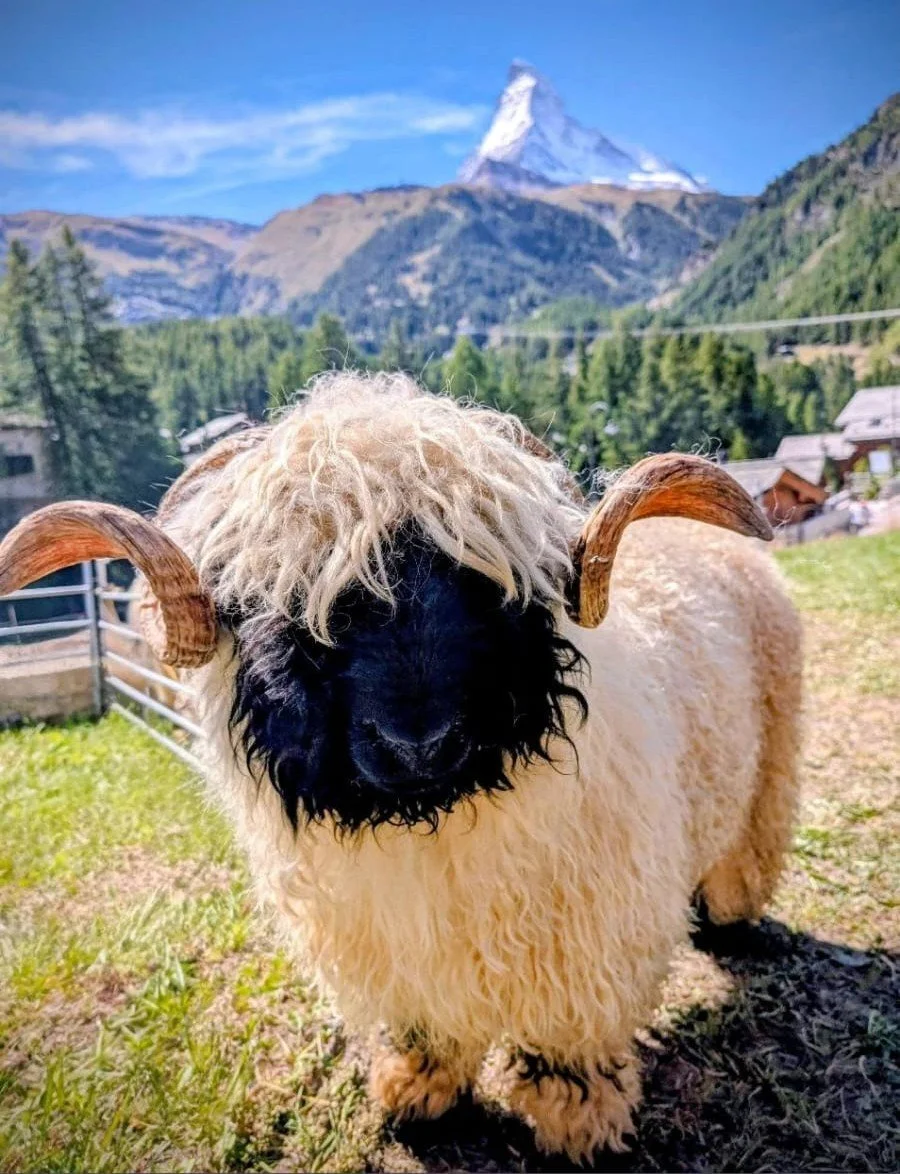
Along the way, you’ll pass a series of information panels introducing the history, culture and natural environment of the valley. The route offers wonderful views back over Zermatt and is easy enough to enjoy at a relaxed pace. If you’re lucky, you may even meet the famous Valais Blacknose sheep, which often graze on the surrounding pastures during the summer.
After around an hour, you’ll reach Zmutt, a peaceful hamlet at 1,936 metres surrounded by lush alpine meadows. Home to around 40 traditional wooden buildings, many dating from the 13th to 16th centuries, Zmutt is considered one of the oldest surviving hamlets in the Alps, while dendrochronological research has identified it as the oldest dated hamlet in Switzerland and among the oldest in the entire Alpine region.
Take your time wandering through its narrow lanes, where the dark timber houses have changed remarkably little over the centuries. During the summer months, you can also enjoy lunch or a traditional Swiss meal at the small mountain restaurant before choosing one of several scenic routes back to Zermatt.
Local tip: Most visitors turn left and continue directly to Zmutt. We recommend taking the small path that continues to the right before the final descent into the hamlet. After a short walk, you’ll reach one of our favourite hidden places in Zermatt—a quiet alpine plateau where it’s often just you, the Matterhorn and complete silence. It’s one of those places that reminds us why we fell in love with these mountains, and one we rarely share except with our guests.
6. Meet the Famous Valais Blacknose Sheep
No visit to the Valais would be complete without meeting its most famous residents—the Valais Blacknose sheep. Native to this region for centuries, they were first mentioned in historical records around 1400 and officially recognised as a distinct breed in 1962. Today, they have become one of Switzerland’s best-loved symbols and are often described as the cutest sheep in the world.
With their fluffy white fleece, black noses, black knees and impressive spiral horns, they’re impossible to mistake. But it’s not just their appearance that wins people over. Valais Blacknose sheep are famous for their calm, curious and friendly nature. If you happen to meet a flock, don’t be surprised if one or two decide they’d rather stay with you than continue grazing. Many visitors arrive planning to spend a few minutes with them and end up staying much longer.
Where you find them depends on the season. During the summer, the sheep spend their days on high alpine pastures, where they can often be reached by hiking from stations along the Gornergrat Railway. In winter, they return to the valley, and with a little planning it’s sometimes possible to visit them in their barns, including organised experiences through Hotel Julen, a family-run hotel well known for keeping its own flock of Valais Blacknose sheep.
Whether you meet them on a sunny mountain meadow or inside a warm wooden barn while snow falls outside, spending time with these gentle animals is one of the most authentic experiences the Valais has to offer.
Local tip: Don’t rush your visit. We always tell people to leave plenty of time because, sooner or later, one of these wonderfully affectionate sheep will decide it wants another scratch behind the ears—and suddenly your schedule won’t seem nearly as important anymore.
7. Wander Through Zermatt’s Old Village
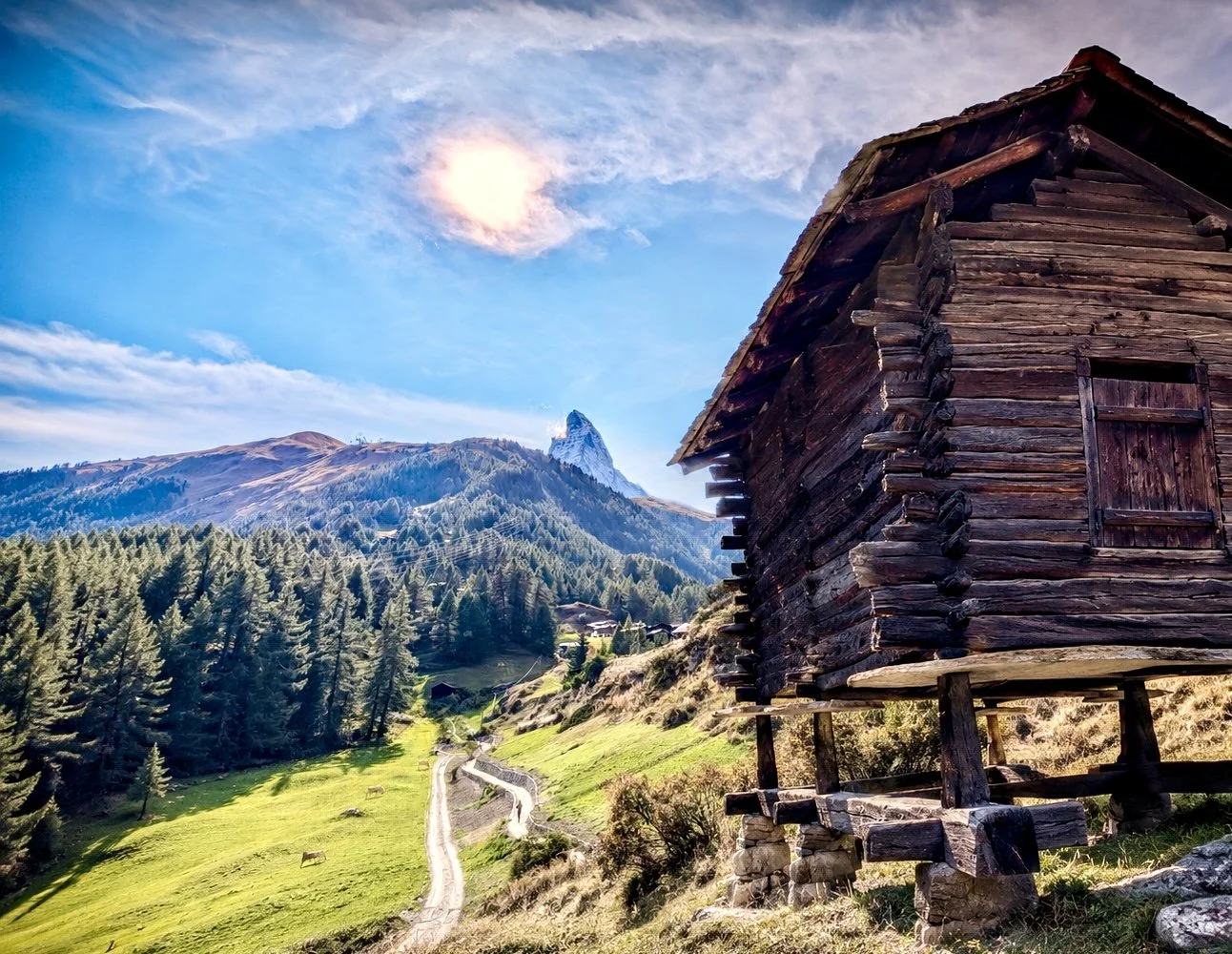
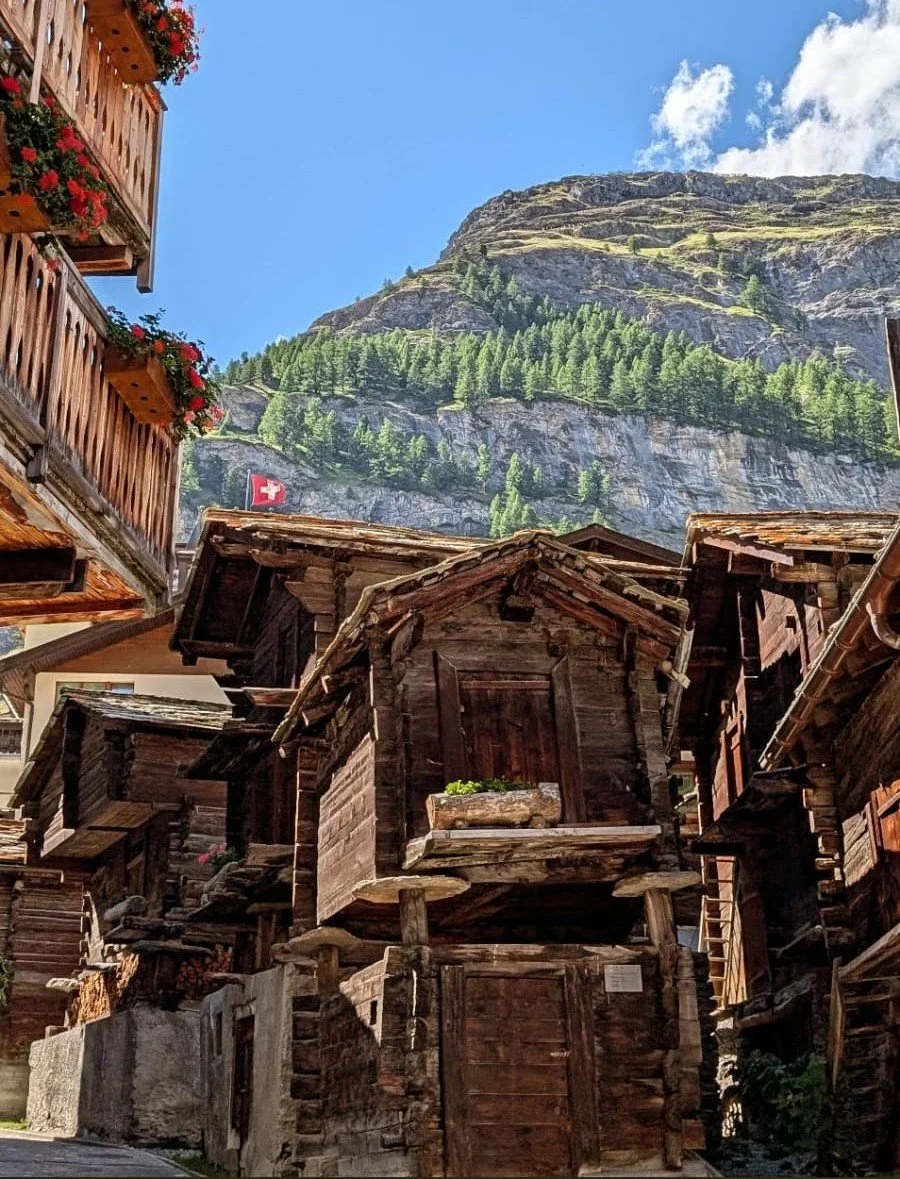
Beyond the lively Bahnhofstrasse lies a completely different side of Zermatt. Step into the narrow lanes of the Old Village (Hinterdorf) and you’ll feel as though you’ve travelled back several centuries. This beautifully preserved historic quarter is home to more than 30 traditional barns, granaries, stables and wooden houses, many dating from the 16th to the 18th centuries.
What makes these buildings so unique are the traditional granaries (Speicher). They stand on wooden or stone stilts topped with large, flat stone discs. These weren’t decorative—they were an ingenious way of preventing mice and other rodents from climbing up and reaching precious food supplies such as rye bread, grain, dried meat and cheese. The buildings themselves were constructed from resin-rich larch wood, which naturally resists decay and insects, allowing many of them to survive for hundreds of years with remarkably little intervention.
As you wander through the quiet alleys, look closely at the details: weathered timber blackened by the Alpine sun, heavy stone roofs, tiny wooden balconies and flower-filled window boxes. It’s easy to imagine what life was like in Zermatt long before it became one of the world’s most famous mountain destinations.
If this glimpse into the past leaves you wanting more, you’ll discover even older examples along the Kulturweg towards Zmutt, where some historic agricultural buildings date back to the 13th century.
Local tip: Visit early in the morning or in the evening, when most day visitors have left the streets. The soft light, quiet alleys and centuries-old wooden buildings create one of the most atmospheric corners of Zermatt—and one of our favourite places for photography.
8. Explore the Gorner Gorge
Just a 15-minute walk from the centre of Zermatt, you’ll discover one of the valley’s most impressive natural wonders: the Gorner Gorge. Carved by powerful glacial meltwater after the last Ice Age, this dramatic canyon cuts through 220-million-year-old serpentinite rock, creating a spectacular world of polished green cliffs, swirling turquoise water and narrow rock passages.
A series of beautifully maintained wooden walkways, galleries and tunnels leads you safely through the gorge, allowing you to experience the power of the rushing Gornera River from above. As the water crashes beneath your feet and echoes between the towering rock walls, it’s hard to believe that this remarkable place is so close to the village. Information panels along the route explain how the gorge was formed and the geology that shaped it over millions of years.
The Gorner Gorge is also an excellent choice if the weather isn’t perfect. Whether the skies are blue or covered in cloud, the colours of the water, the dramatic rock formations and the sound of the river make it a memorable experience throughout the season.
The walk itself takes only around 20 to 30 minutes, but there’s no need to rush. Stop on the viewing platforms, listen to the river below and take in the extraordinary patterns carved into the rock by thousands of years of flowing water.
If you’d like to extend your day, continue on the hiking trail towards Blatten or Furi, where you’ll discover beautiful forests, mountain scenery and several quiet places to stop along the way. More experienced visitors can even book a guided adventure through the upper gorge, although the lower boardwalk is suitable for almost everyone.
Local tip: Instead of turning around at the end of the boardwalk, continue your walk towards Blatten and return to Zermatt on the opposite side of the valley. It’s a much quieter route, with lovely forest scenery and completely different views of the mountains.
9. Visit the Matterhorn Museum
If you’d like to understand why Zermatt became one of the world’s most famous mountain destinations, don’t miss the Matterhorn Museum – Zermatlantis. Unlike many museums, it’s compact, engaging and easy to explore, making it just as enjoyable for families as it is for mountain enthusiasts.
The museum takes you beneath the village into a fascinating reconstruction of old Zermatt, where traditional wooden houses, barns and workshops recreate what life was like before tourism transformed the valley. Walking through this miniature historic village gives a wonderful insight into how local families lived, worked and survived in the high Alps.
No visit would be complete without learning the story of the first ascent of the Matterhorn in 1865. The museum tells the dramatic story of Edward Whymper’s successful expedition and the tragic accident on the descent, when four members of the party lost their lives. Among the museum’s most moving exhibits is the original rope that snapped during the accident, one of the most famous artefacts in the history of mountaineering.
The exhibitions also explore the development of mountaineering in Zermatt, including the achievements of pioneering climbers and the important role women played in Alpine history. Short films, photographs and interactive displays make the stories accessible even if you’ve never climbed a mountain yourself.
Before you leave, take a look around the museum shop. It offers an excellent selection of books on the Matterhorn, the history of Zermatt and Alpine mountaineering—perfect if you’d like to continue discovering the remarkable story of this valley long after your visit.
Local tip: If you’re interested in the history of the Matterhorn before heading into the mountains, visit the museum at the beginning of your stay. You’ll see the landscape around Zermatt with completely different eyes once you know the stories behind it.
10. Enjoy Coffee or an Apéro at Zermatt’s Oldest Hotel
Some places are worth visiting not because of what you do there, but because of the stories their walls could tell. Hotel Monte Rosa is one of them.
The building’s history dates back to 1839, when Dr. Josef Lauber opened the first guesthouse in Zermatt with just a handful of beds. In 1855, the visionary hotelier Alexander Seiler transformed it into the Hotel Monte Rosa, recognising long before most people that the Matterhorn would one day attract visitors from all over the world. The hotel soon became the meeting place of the great pioneers of alpinism and the birthplace of Zermatt’s hotel tradition.
Among its regular guests was Edward Whymper, who stayed here during his attempts to climb the Matterhorn. On 13 July 1865, he left the hotel for what would become the first successful ascent of the mountain, forever linking the Monte Rosa with one of the most famous stories in mountaineering history.
Today, the hotel still stands proudly at the upper end of Bahnhofstrasse, remarkably unchanged in its elegant Belle Époque character. Looking at old paintings and photographs of Zermatt, you’ll often notice the Monte Rosa dominating what was once only a small farming village surrounded by a handful of wooden houses. Long before luxury hotels filled the valley, this was where the story of tourism in Zermatt truly began.
Even if you’re not staying there, step inside for a coffee, afternoon cake or an apéritif at Edward’s Bar-Café. Sit back, enjoy the atmosphere and imagine the conversations that once took place here between the first mountain guides, explorers and climbers preparing for adventures that would make Alpine history.
Local tip: If you’ve already visited the Matterhorn Museum, come here afterwards. Seeing the place where Edward Whymper planned his expeditions brings the history of the Matterhorn wonderfully to life.